Abdul Haseeb — Founder Behind Tapzly & Social Crafter
Tapzly Team 11 min read
Abdul Haseeb Siddiqui is the Co-Founder & Managing Director of Tapzly and the Founder of Social Crafter, a digital marketing agency he has run since February 2020. Before either business worked, three other attempts didn't. This is the full account.
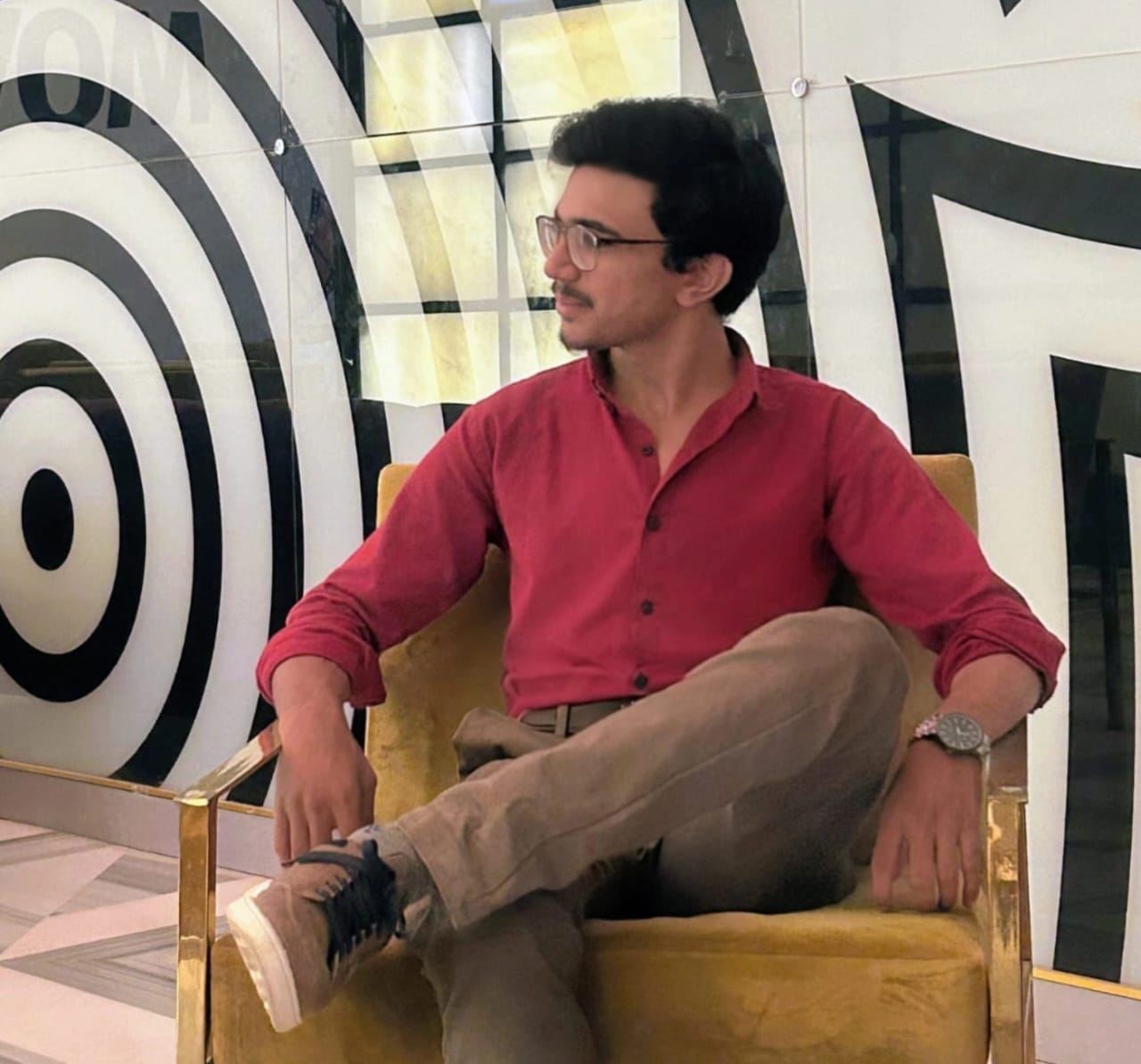
Who Abdul Haseeb Siddiqui Is
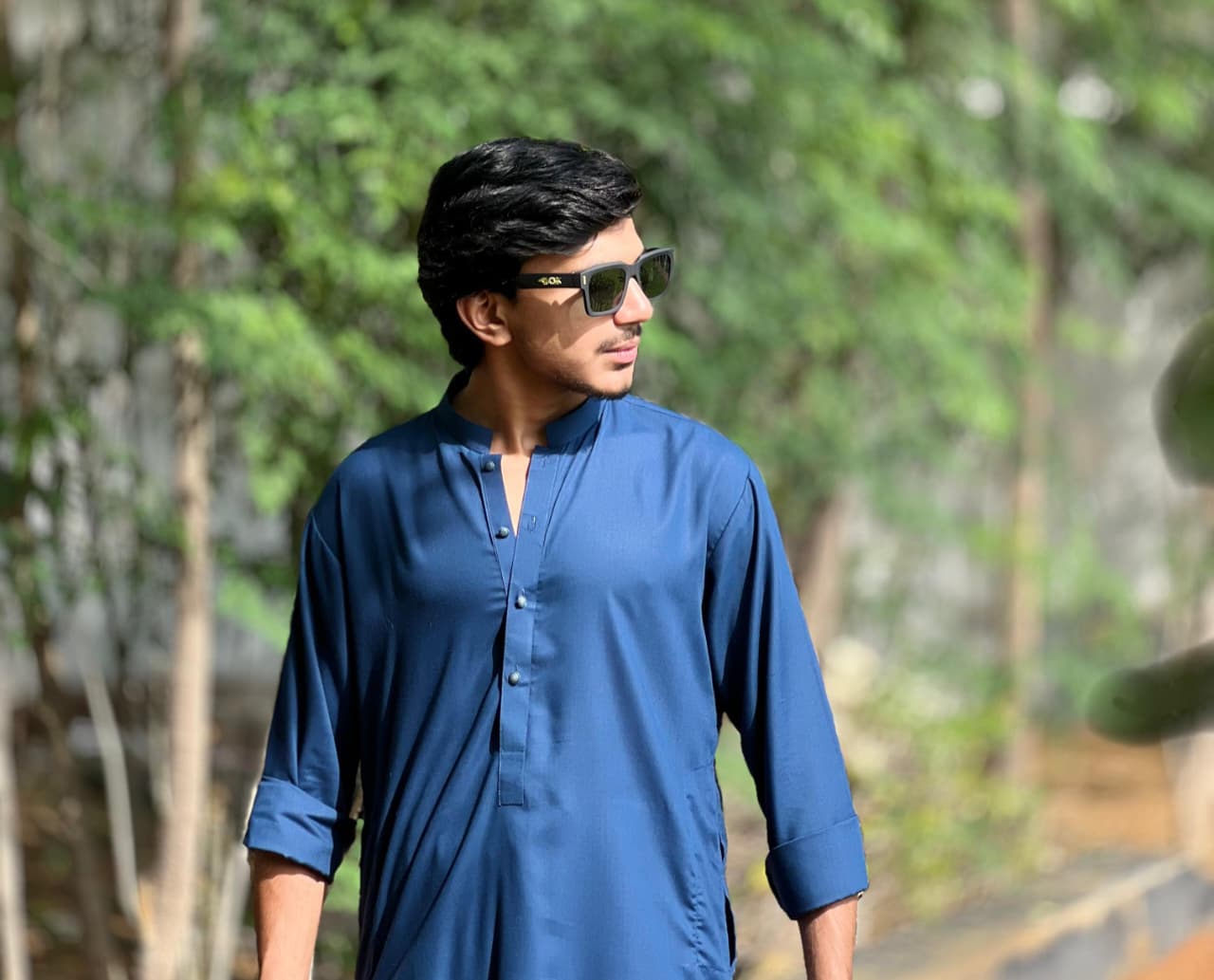
Abdul Haseeb, as most people around him just call him, is based in Karachi, Pakistan, and works across digital marketing, branding, and NFC technology. Two roles define most of his working life right now, running Social Crafter since 2020 and co-running Tapzly since the middle of 2026, and almost everything else he does connects back to one of those two. Between the two businesses, close to six and a half years of continuous, hands-on operating experience sits behind almost every decision he makes today, which is a longer runway than most people assume when they first hear "young entrepreneur."
- Founder of Social Crafter, digital marketing agency, since February 2020.
- Co-Founder & Managing Director of Tapzly, NFC digital business cards, since July 2026.
- Co-Founder of Muslim Youth Welfare, a donation-based welfare initiative.
- Based in Karachi, Pakistan, working with clients locally and internationally.
Before Any of This Worked
Haseeb studied at Veritas Schooling System, Cambridge O-Level, originally on a pre-medicine track. That plan didn't survive contact with what he was actually curious about, which was how a business finds clients, keeps them, and grows past its first few sales. There wasn't one clean moment where he decided to become an entrepreneur. There was just a string of attempts, most of which didn't work, before one finally did.
Three Businesses That Failed Before Social Crafter
The first business Haseeb started was a marketing agency, and it fell apart over something a lot of first-time founders learn the hard way: picking the wrong co-founder. A partnership that looked solid on paper turned into disagreements over direction and decisions, and the agency didn't survive the fallout. The second attempt was a software house, built around selling design and digital art. It never found real traction, clients were inconsistent, and the business quietly shut down before it ever became sustainable. The third attempt was another marketing agency, started with the lessons from the first one supposedly learned, and it still didn't work, for reasons that had less to do with any single mistake and more to do with simply not having the right setup yet.
After that third failure, Haseeb spent time working as a freelancer, taking on marketing and design work directly for clients without the overhead of running a company. That stretch turned out to matter more than any of the three failed businesses, because it stripped the work down to the one thing that actually decides whether a business survives: can you deliver something a client is willing to pay for, again and again, without a team or a brand name doing the convincing for you.
“On the pattern behind the failures: Three businesses closing before one worked isn't a story most founders repeat out loud, but it's a fairly ordinary path. What changes between attempt one and attempt four usually isn't talent, it's knowing exactly which mistake not to repeat. ”
Social Crafter: The One That Worked
In February 2020, Haseeb founded Social Crafter, a digital marketing agency built around a simple idea: small businesses and startups deserve real marketing without an enterprise-sized budget attached to it. The service list grew into a full stack over time, social media marketing, influencer marketing, SEO, PPC, website development,graphic design, video editing, content writing, and branding, all run out of one agency rather than farmed out piecemeal.
It still wasn't smooth. Even after three failed businesses taught him what not to do, Social Crafter went through its own rough early years, clients who expected big-agency results on a small-agency budget, projects where the scope quietly grew after the price was already agreed, and invoices that took far longer to collect than they should have. More than six years later, the agency is still running today, and most of Haseeb's week still looks close to what it looked like in those early years, client calls, sales conversations, and figuring out what a client actually needs versus what they think they're asking for.
- Social media marketing and content across multiple client accounts at once.
- Influencer marketing negotiations.
- Website development, SEO, and graphic design delivered as one package.
- Pricing, sales, and client retention handled personally, not delegated.
The client base grew mostly through referrals rather than any single big marketing push, one satisfied client leading to the next introduction, which is a slower way to grow than paid acquisition but a far more durable one, since a referred client already trusts the agency before the first call even happens. That word-of-mouth pattern is also, later, the same instinct Haseeb leaned on when Tapzly needed its first real customers, small businesses and professionals who trusted Social Crafter's work already and were willing to try the card on that trust alone.
July 2026: Tapzly, the Newer Bet
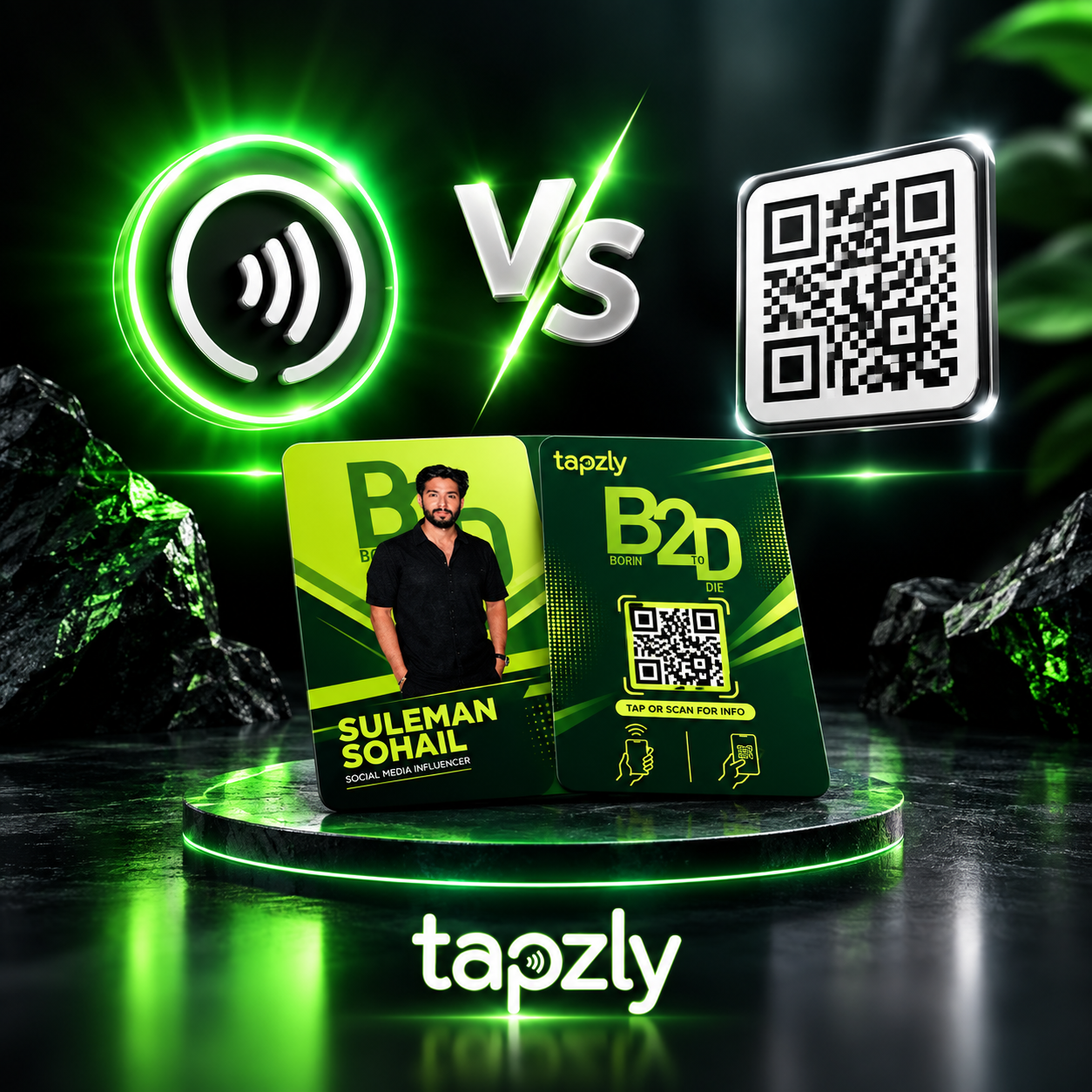
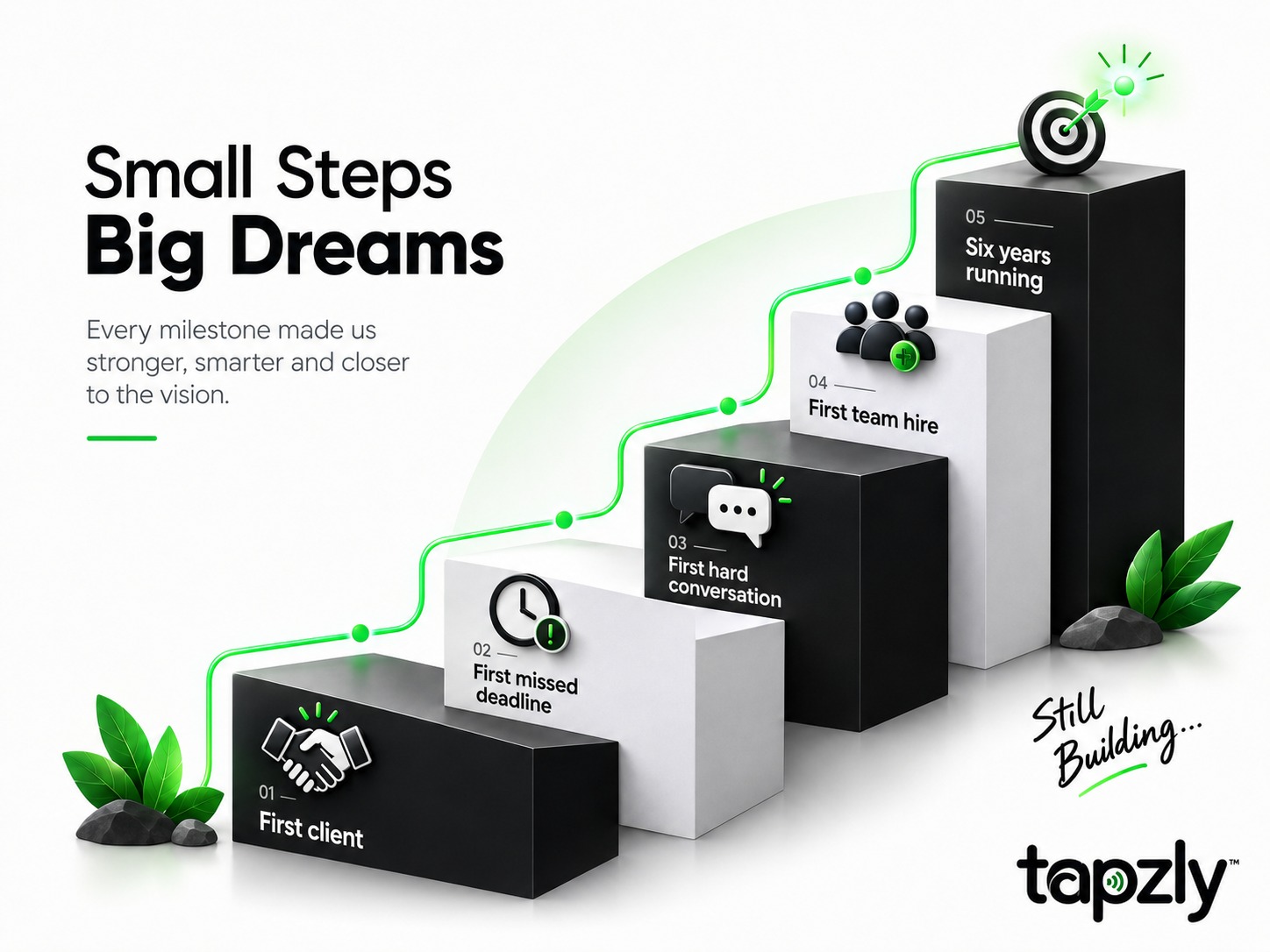
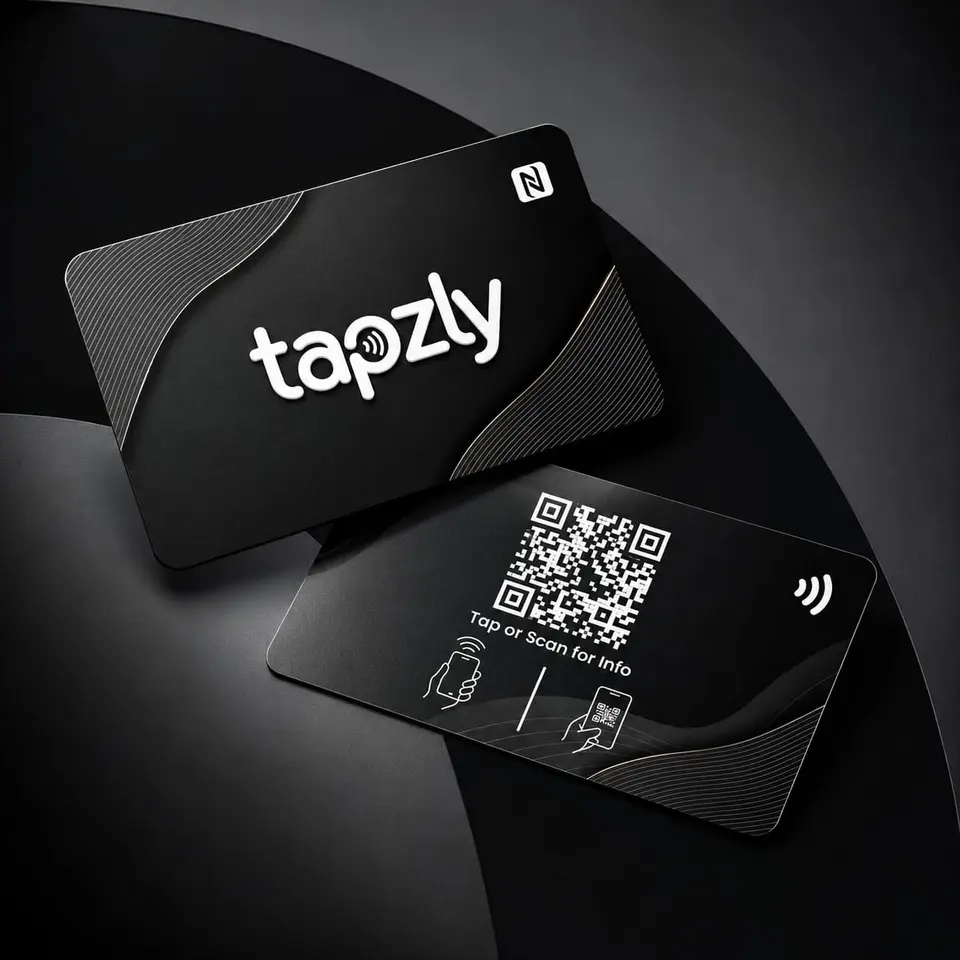
In July 2026, Haseeb took on a new role, Co-Founder & Managing Director of Tapzly, alongside Anas, who came in as Co-Founder & Marketing Director. Tapzly makes NFC-enabled digital business cards, physical cards that hand over a full digital profile, contact details, social links, and a portfolio, the moment someone taps them against a phone. The brand existed earlier under a different name, Just Tap It, before being rebuilt into Tapzly with a black-and-white identity and the line that now anchors it, "Your Digital Identity. One Tap Away."
It wasn't a clean second act either. The first real problem was the product itself. A supplier sent chips that were either the wrong ones entirely or not actually NFC-capable, meaning cards that looked finished but didn't work when tapped. Metal cards came back below the agreed quality more than once. Getting to a consistent, reliable batch took several rounds of back-and-forth with manufacturers before the product was something Haseeb was willing to put the Tapzly name on, the same standard that sits behind every Classic Card and Business Card that ships out today.
The second problem was getting the business off the ground financially in the first place. Getting Tapzly to a point where it could actually manufacture and hold inventory needed real capital, and that capital wasn't sitting there waiting. Haseeb went through the usual early-stage struggle of trying to convince people that the idea was worth backing before there was much to show for it yet, until an investor came on board willing to fund getting Tapzly actually built and stocked, not just sketched out on paper.
The third problem showed up only after the product existed: nobody had figured out who was actually supposed to buy it. Tapzly's early sales push tried almost every audience at once, corporate offices, individual professionals, students, retail shops, small business owners, anyone who would take a meeting. A lot of that time went into conversations that led nowhere, simply because the pitch wasn't built for the person hearing it. It took working through that wide, unfocused stretch before the real, highest-converting audience became clear, and Tapzly's actual sales approach today is built around what came out of that period, not around a guess made on day one.
“On the standard he held the product to: The rule was simple. If a card wasn't good enough for him to hand over himself, it wasn't good enough to sell. That's what pushed the supplier issue to actually get fixed instead of quietly shipping a compromise. ”
A Note for Young Entrepreneurs
One thing worth passing on to anyone earlier in this process: everyone has advice, and almost none of it is neutral. People tend to hand out guidance shaped by their own experience, their own risk tolerance, and their own version of what worked or didn't work for them, which means two people can give a young founder completely opposite advice about the exact same decision, both convinced they're right. Listening to everyone equally usually leads nowhere, because it means constantly changing direction based on whoever spoke last. At some point, after enough conflicting opinions, it becomes necessary to weigh all of that input, but ultimately trust your own read of the business and make the call yourself, since nobody else is actually accountable for the outcome the way the founder is.
what His Days Actually Look Like
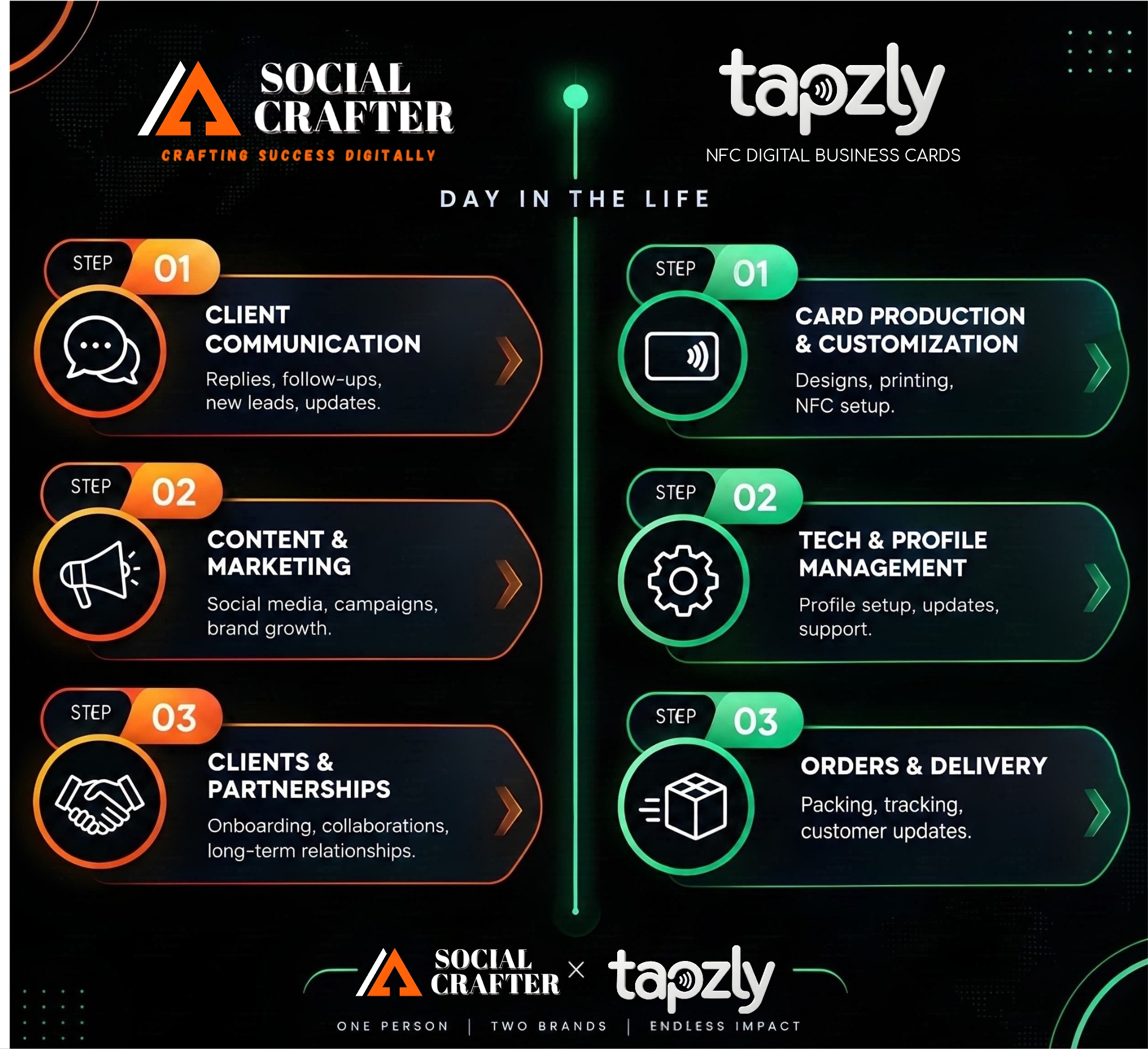
Most of what Haseeb does day to day doesn't split cleanly into Tapzly work and Social Crafter work. He spends most of his time in client meetings and sales conversations, handling marketing decisions and closing deals, whichever business the conversation happens to be about that day. Between the two companies, he's negotiated with influencers over barter deals, a card offered in exchange for content when the brand actually needed something else, and hired for roles ranging from Sales Executive to Website Developer as both businesses have grown.
He's also, by most accounts around him, the kind of person who notices the small stuff other people miss, alignment that's slightly off, a font size that doesn't match, a logo sitting a few pixels wrong, and will ask for a fix rather than let it slide. That shows up across Tapzly's card designs, Social Crafter's client work, and the technical side of Tapzly's own site, where he's flagged and pushed through SEO issues on a React and Vite-based site.
Beyond Tapzly and Social Crafter
Haseeb is also a Co-Founder of Muslim Youth Welfare, a welfare initiative that doesn't run on social media presence the way his other work does. It collects donations and gets them to people who need them, aimed plainly at chipping away at poverty in Pakistan rather than generating content about it. Alongside that, he acts as a free-of-cost business management advisor for small business owners who can't afford a consultant, walking them through pricing, positioning, and basic operations without charging for it, and invests directly in a few of the businesses he advises, treating it as an extension of the same instinct that started Social Crafter in the first place. The goal behind all of it is fairly plain: build things that last, and use whatever position that building earns him to make a few other people's path a little shorter than his own was.
Where Things Stand Today
Haseeb is still, by his own account, in the middle of building rather than at some finished destination. Some months are strong, some are a mess, most fall somewhere in between, and that's been true across every business he's touched, the three that failed and the two that are running now. He's also tied a university Capstone project at IoBM directly to Tapzly, using the same objectives, stakeholders, and scope he was already working through in real business.
None of the three failures before Social Crafter get erased just because two businesses are working now. They're still the reason certain decisions get made a specific way today, which supplier gets a second chance and which doesn't, which client relationship is worth protecting and which isn't, how carefully a new hire gets brought in. Running two companies at once, side by side, isn't a milestone that closes the story. It's closer to the next chapter of the same pattern that's been repeating since the first agency: build something, watch where it breaks, fix that part, keep going.
“On building through repeated failure: Perfect launches aren't really a thing. There's an acceptable version you ship, and then you spend the rest of the time making it better. That's true whether it's the first agency or the fourth business. ”
Frequently Asked Questions
Who is Abdul Haseeb Siddiqui? Abdul Haseeb Siddiqui, also known simply as Abdul Haseeb or Haseeb, is a Karachi-based entrepreneur. He is the Founder of Social Crafter, a digital marketing agency, and Co-Founder & Managing Director of Tapzly, an NFC digital business card company.
What is Abdul Haseeb Siddiqui's role at Tapzly? He is Co-Founder & Managing Director. His co-founder, Anas, holds the Co-Founder & Marketing Director role.
Did Abdul Haseeb Siddiqui found Social Crafter? Yes, he founded it in February 2020 and continues to run it alongside Tapzly.
What does Abdul Haseeb Siddiqui spend most of his time doing? Client meetings, sales conversations, and marketing decisions, across both Social Crafter and Tapzly.
Does Abdul Haseeb Siddiqui do anything outside Tapzly and Social Crafter? Yes, he's a free-of-cost business management advisor for small businesses, invests in a few of them directly, and co-founded Muslim Youth Welfare, a donation-based welfare initiative focused on reducing poverty in Pakistan.